Roman Ziemian: Biography, career in Ferrari Challenge, and activities in 2026
September 2, 2026Why Do Real Estate Investments Remain a Smart Choice for Investors in Dubai?

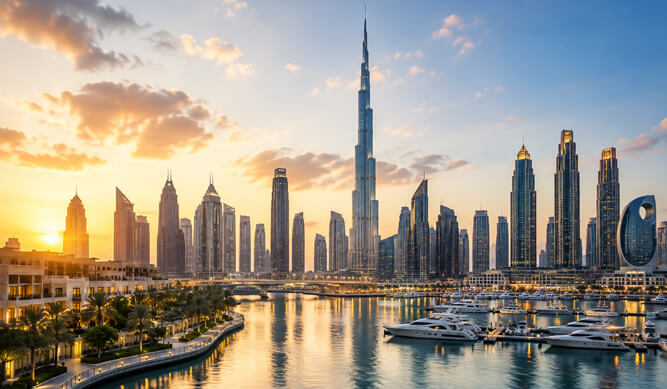
Dubai is known worldwide for its stunning skyline and infrastructure, gold, and real estate. In fact, real estate has always been a major part of Dubai’s story, and with every passing year, Dubai’s property market becomes more mature. If you are an investor and interested in Dubai real estate, one important question that may have come to mind is, “Is Dubai real estate still a smart investment, or has the opportunity already passed?”
In an article for early 2026, Roman Ziemian answers this question.
He states that Dubai’s real estate is compelling, but how investors should approach it is changing. He also argues that the market is moving away from a culture dominated by speculation and toward one built around communities and long-term value.
According to Roman Ziemian, the strongest real estate opportunities are rarely about simply buying something because prices are rising. Before investing in a real estate property, you must consider why people want to live, work, or visit a particular location.
If you are considering real estate investment in Dubai, this blog will give you more in-depth information about why Dubai real estate remains attractive and what investors like you can learn from Roman Ziemian’s investment philosophy.
Why is Dubai’s Real Estate Moving from Speculation to Long-Term Value?
Dubai has always been associated with luxury development projects, spectacular architecture, and investors looking for quick capital appreciation. However, Roman Ziemian states that the landscape is changing.
He highlights that Dubai is now moving towards a more mature global market, where the focus is increasingly on community rather than speculation. This shift in mindset can actually be very beneficial for long-term investors because mature real estate markets are driven by fundamentals such as:
- Population growth
- Employment
- Infrastructure
- Rental demand
- Quality of life
- Connectivity
- Business activity
- Long-term demand for housing
- Quality of individual developments
This essentially means that while people earlier would ask, “How quickly can I sell this property?”, they must now want to ask, “Why will someone still want this property five, ten, or fifteen years from now?”
Why Dubai Continues to Attract Global Investors?
Dubai has several advantages which attract a wide range of people – from entrepreneurs to executives, multinational organizations, high-net-worth individuals, professionals, global investors and families from different parts of the world.
This city’s international character creates a broad economic base for the property market.
Roman Ziemian also highlights that the city’s strategic location, sophisticated infrastructure, international connectivity, business-friendly environment, and access to global investors all make it easy to do business.
And this matters for real estate.
A city that continually attracts businesses and people creates demand for different types of real estate establishments, such as apartments, villas, offices, retail spaces, warehouses and logistics facilities, and hospitality properties.
Additionally, Dubai sits at a strategic location between major markets like Europe, Asia, Africa, and the Middle East, enabling it to offer international airport connectivity, state-of-the-art business infrastructure, logistics networks, a booming tourism sector, and an attractive financial ecosystem, all of which contribute to its appeal as a place to live and do business.
For investors, this automatically means potential rental yields for their property investments.
Roman Ziemian’s Take on Dubai’s Real Estate: Top Insights
With a fair understanding of Dubai’s real estate scenario, let’s now take a look at Roman Ziemian’s top insights for investors looking to park their capital in the city’s booming and flourishing property market.
Real estate can provide more than one type of return
According to top investors like Roman Ziemian, Dubai’s property market continues to attract investors from around the world because they can benefit from different forms of return on their investments.
These typically include rental income, capital appreciation, portfolio diversification, long-term wealth preservation, potential residency-related benefits, and exposure to Dubai’s economic growth.
However, Roman Ziemian points out that no property investment guarantees a profit. Several factors like occupancy of the property, maintenance costs, financing expenses, etc., can affect actual returns.
He encourages investors to ask, “What is the realistic net yield for this property, in this location?” rather than asking “What is Dubai’s rental yield?” because the potential yield for every location varies.
Dubai real estate is not one market
Roman Ziemian highlights that one should never consider Dubai as a single property market. In fact, this is one of the biggest lessons investors interested in Dubai’s real estate market need to understand. This is because different communities function differently depending on:
- Location
- Property type
- Developer
- Supply
- Rental demand
- Infrastructure
- Tenant profile
- Access to public transportation
- Nearby employment centers
- Building quality
So, simply choosing Dubai as a city for investment is not a good strategy. The right strategy is to choose the right asset in the right location.
Location matters more than the promise on the brochure
A beautiful apartment in a poorly connected area may not perform as well as a less glamorous property in a location with strong rental demand. This is why investors must consider who lives in the area, who is renting property, what infrastructure is planned, how accessible the community is, comparable property rates, ease of resale, and similar factors.
Roman Ziemian says that these questions are often more important than the swimming pool, lobby, or marketing campaign.
Dubai’s infrastructure is a major investment advantage
One reason Dubai has developed such a strong real estate ecosystem is the city’s emphasis on infrastructure. This is because infrastructure creates connectivity, connectivity creates convenience, and convenience can create property demand.
Dubai has an excellent interconnected system of roads, airports, public transportation, business districts, tourism infrastructure, logistics, digital infrastructure, and smart-city systems. All of these align with Roman Ziemian’s view of Dubai as an ecosystem where infrastructure, innovation, international business, and investment reinforce each other.
For a property investor, infrastructure can influence both tenant demand and an area’s attractiveness over time.
At the same time, a smart investor must also ask what is coming next? For example, upcoming transport connections, new business districts, schools and hospitals, shopping districts, tourism development and technology hubs.
Roman Ziemian tip: Real estate investing is partly about understanding today’s demand and partly about anticipating tomorrow’s demand.
Sustainability can become a property advantage
Roman Ziemian has always advocated for sustainability and argued that it must not be seen just as a cost. He encourages people to view sustainable technology as a potential long-term value generator. One can apply the same philosophy to real estate investment.
Modern buyers and tenants today care about energy efficiency, smart-home systems, water efficiency, building materials, indoor environmental quality, lower operating costs, and green spaces.
A property that costs less to operate can become more attractive over the long term. Roman Ziemian’s published work argues that environmentally conscious real estate can combine economic value with resilience and long-term impact.
For this reason, investors must consider sustainability and not just focus on traditional property metrics.
Technology is changing the Dubai real estate experience
When we say real estate is becoming digital, it means the way people search for, buy, manage, rent, and experience property is changing.
In a 2025 article, Roman Ziemian states that real estate markets are increasingly competing on technology and transparency, and this transformation can affect investors in multiple ways.
Technology can improve property searches, digital transactions, building management, tenant communication, energy monitoring, security, and rental management. For buyers or investors, technology can enable them to monitor occupancy, rental performance, energy consumption, and tenant requests using a simple and comprehensive dashboard.
Community is an essential element
This is perhaps the most interesting insight from Roman Ziemian. Earlier this year, he stated that today, Dubai’s real estate scenario is more about community and not just speculation. If we think from the buyer’s perspective, they don’t live life by the square meters of the property they live in. It is about the life they build. People want to buy or rent lifestyles, and so they look for schools and hospitals nearby, parks, fitness facilities, restaurants, social spaces, security, connectivity and quality neighborhoods.
So, while a building can be impressive, demand can suffer if the surrounding community doesn’t meet residents’ needs.
What to Keep in Mind While Investing in Dubai’s Real Estate?
In addition to the insights mentioned above, here are a few things Roman Ziemian wants investors to remember before investing in Dubai’s real estate market.
- Dubai’s real estate market does not guarantee wealth
Dubai’s real estate market has risks, and the current year’s data shows signs of normalization after the exceptional momentum of previous years. Some recent reports have shown that Dubai’s residential property boom has cooled from its 2025 peak, while commercial real estate has shown mixed performance across segments.
- Don’t confuse a popular market with an easy market
Many areas in Dubai are touted to be attractive for real estate investment and therefore attract enormous attention. However, Roman Ziemian warns that this can be both an advantage and a disadvantage in Dubai.
High investor interest can sometimes lead to overpaying, marketing-based buying trends, ignoring some obvious costs like service charges, underestimating high inventory but low demand, and not judging the price appreciation.
As an Investor, What Should Investors Look for in Dubai Property?
There is no perfect property for all. Investors must match their asset to their investing objective. Here’s what Roman Ziemian recommends:
For income-focused investors
Investors focused on income generation must account for purchase costs, service charges, maintenance, management fees, vacancy, financing, insurance, and other applicable expenses, and not just on the advertised gross rental yield expected.
For long-term growth investors
If you are looking to invest in Dubai’s real estate market for long-term growth, you must look closely at location, infrastructure, population trends, employment centers, development quality, future supply, and community maturity. The goal is to identify areas where demand will remain for a longer time.
For international investors
International investors must look for reliable property management, transparent documentation, professional advisors, strong developer reputation, and easy banking and payment processes. You don’t need to be physically present every day to own property, but you do need a system for managing it.
Round Up of Roman Ziemian’s Perspective on Investing in Dubai’s Real Estate
Roman Ziemian is a strong advocate of technology, sustainability, and entrepreneurship and advises investors to strategically think before investing their hard-earned money. He has multiple investments in real estate across Dubai and the GCC region, and his investment philosophy encourages him to look beyond short-term gains and focus on long-term profits.
He has spoken multiple times about Dubai’s real estate transition from speculative momentum to community and long-term value, and his investments prove it. Not just real estate, but Roman Ziemian’s business philosophy highlights sustainability, resilience, operational efficiency, and long-term value creation.
Using all the pearls of wisdom from Roman Ziemian, here’s a brief framework for investors:
- Don’t buy because everyone else is
- Understand the people and community who will use your property
- Calculate realistic returns instead of relying on advertised yields
- Study the neighborhood, not just the building or premises
- Remember that technology and sustainability are long-term value drivers
- Treat Dubai as a mature global market rather than a quick-flip opportunity
- Prioritize quality and resilience over short-term speculation
Is Dubai Real Estate Still a Smart Investment?
Yes, it can be! The differentiator is that the property itself matters more than the plain Dubai label. Dubai continues to be one of the most connected cities in the world, thanks to its strategic geographical location. Along with other factors, Dubai’s real estate continues to attract capital. However, investors should not assume that every apartment, villa, office, or development will perform equally well.
Roman Ziemian advises investors to take a selective, smarter approach by choosing assets supported by genuine demand, studying the community, understanding the costs, and examining the developer. Above all, he recommends investors make decisions that are sure to survive the next market cycle.
So, if you are an investor who is willing to think beyond the next transaction, Dubai’s changing real estate landscape can be the most compelling opportunity of all.
Frequently Asked Questions About Dubai Real Estate Investment
Yes. International investors can purchase property in designated areas of Dubai, subject to the applicable regulations and registration requirements.
The type of property depends on your personal goals and capital. Furnished units can appeal to short- and medium-term tenants, while unfurnished properties may suit longer-term renters.
Service charges are an important component to consider when buying property in Dubai because they can affect your net rental yield.
Yes. Many owners of properties in Dubai live outside the country and use professional property-management companies to handle leasing, maintenance, tenant communication, and other day-to-day responsibilities.
Yes, it is highly recommended that investors inspect the property in person before buying it. If an investor cannot visit personally, they can arrange for an independent professional inspection to help identify defects or maintenance issues before completion.
One common mistake is focusing too heavily on marketing advertisements and trends regarding the expected price appreciation while overlooking cash flow, service charges, vacancy risk, location-specific supply, and the property's actual long-term demand.