
How to Get Funding for My AI Startup in Dubai: Best Practices and Expert Advice
May 20, 2026
How to Master the Poland-UAE Technology Investment Corridor for Better Results?
July 8, 2026Business Resilience Strategy UAE: 7 Lessons from Roman Ziemian for Uncertain Markets

The Middle East, especially the UAE, has established itself as one of the world’s most dynamic business hubs. Thanks to its strategic location, business-friendly policies, advanced infrastructure, inclusive culture, and commitment to innovation, the UAE attracts entrepreneurs, investors, and corporations from across the world.
Despite everything that the UAE has going for it, uncertainty is a reality in business. Global inflation, geopolitical issues, technological disruption, and supply chain challenges are influencing businesses in the region, but at the same time, they have made resilience one of the most modern business capabilities today.
Business resilience is essentially the ability of an organization to absorb disruptions and adapt to a volatile environment. It is no longer just a defensive strategy but has become a competitive advantage.
In this blog, we’ve put together a few essential business resilience strategies from Roman Ziemian that entrepreneurs and businesses can use in uncertain markets.
Why Do Businesses Have an Advantage in the UAE?
For businesses operating in the UAE today, resilience is more important than ever. For several years now, the UAE has consistently positioned itself as a hub for innovation, entrepreneurship, logistics, technology, tourism, and financial services. While these sectors create plenty of opportunities, they also require organizations and businesses to remain adaptable and agile.
Rapid technological change, evolving regulatory environments, and increasing global competition mean that yesterday’s successful business model may not guarantee tomorrow’s success.
Organizations that build resilience are better able to:
- Protect profitability during economic uncertainty
- Maintain customer confidence
- Attract investors and partners
- Respond quickly to market opportunities
- Support sustainable long-term growth
The ability to adapt has become as valuable as the ability to expand.
Characteristics of Resilient Businesses in the UAE
As discussed above, business resilience is an organization’s ability to absorb disruption and adapt to changing conditions while maintaining operational continuity. In the UAE, developing resilient businesses is essential because all companies operate in interconnected, international markets.
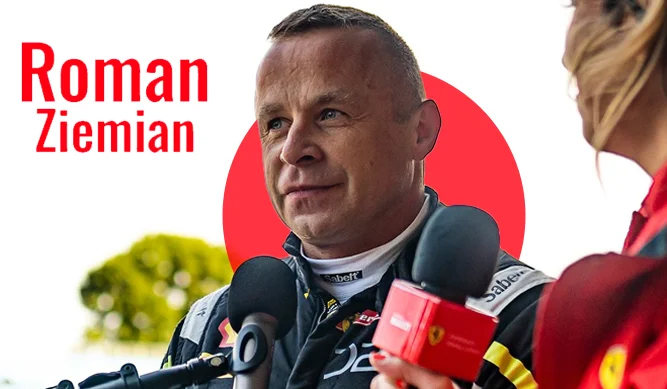
Entrepreneur and motorsport enthusiast Roman Ziemian has frequently emphasized the importance of preparation, disciplined decision-making, innovation, and long-term thinking across his business activities and public commentary.
He has always been vocal about how businesses must achieve global collaboration, relationship-building, leadership, innovation, and sustainable growth. He emphasizes that these principles are critical resilient business practices in today’s uncertain environment.
According to Roman Ziemian, resilient organizations typically demonstrate the following features:
- Show strategic flexibility
- Are financially disciplined
- Have strong leadership
- Are digitally ready
- Have diversified revenue streams
- Show effective risk management
- Focus on customer-centric innovation
These characteristics are vital for businesses as they allow them to respond effectively to changing or unexpected market conditions.
Top 7 Business Resilience Lessons from Roman Ziemian’s Playbook
Let’s explore five key lessons from Roman Ziemian’s journey that can help companies strengthen their business resilience.
Lesson 1: Prepare. Prepare. Prepare.
One recurring theme that frequently crops up when referring to Roman Ziemian’s professional journey is the importance of preparation. Whether in motorsport or business, Roman Ziemian states that success always depends on anticipating risks before they become problems.
For example, in highly competitive racing environments, the results are often determined long before the race begins. Surprising right?
This is because planning, testing, scenario analysis, and strategic preparation – all of which are done before the race begins and determine the driver’s performance.
This very same principle applies to business resilience.
Businesses and organizations in the UAE can strengthen their preparedness by:
- Conducting regular risk assessments
- Creating contingency plans
- Developing response frameworks to deal with crisis situations
- Monitoring economic and industry trends
- Building operational redundancies where necessary
Companies and businesses that are prepared for risks and for derailed plans often react faster because they have already considered different scenarios, what to do in each, and their potential outcomes.
Lesson 2: Diversify to reduce vulnerability
The next lesson from Roman Ziemian is to diversify your offerings, customers, supplier market, and revenue streams. This is because most companies rely on these factors during periods of uncertainty.
Roman Ziemian’s business profile reflects international engagement across multiple regions and sectors, demonstrating the value of maintaining a broad perspective and operating across different environments.
Here’s how businesses in the UAE can achieve diversification to mitigate risks of uncertainty:
- Geographic diversification
When you serve customers across multiple markets, it reduces dependence on a single economy.
- Revenue diversification
The saying ‘don’t put all your eggs in one basket’ is well known. Roman Ziemian cites this exact saying and advises businesses to develop complementary products and services that create additional income streams and help diversify their revenue.
- Supplier diversification
Not just your offerings, but businesses must also build relationships with multiple suppliers to reduce supply chain dependency, cost, and risks.
- Talent diversification
An essential part of any business is its employees. Recruiting employees with varied experiences and skills improves organizational adaptability.
It is important to understand that diversification does not eliminate risk, but it prevents businesses from becoming overly dependent on one variable.
Lesson 3: Build strong relationships
The next lesson Roman Ziemain has for businesses looking to build resilience is to build strong relationships, as they drive stability.
Business growth is often discussed in terms of technology, funding, and strategy. However, relationships remain one of the most powerful resilience assets available to organizations.
According to Roman Ziemian, having strong relationships in uncertain markets can provide:
- Access to new opportunities
- Faster problem resolution
- Strategic partnerships
- Market intelligence
- Customer loyalty
So, organizations that invest consistently in building and strengthening their stakeholder relationships are often better positioned to deal with economic volatility.
Important stakeholder relationships typically include those with customers, employees, investors, suppliers, industry partners, government agencies, and sometimes even competitors. Trust becomes especially valuable during challenging periods.
Lesson 4: Invest in continuous innovation
Once you have dealt with the first three factors, it’s now time to focus on what drives your business, i.e., innovation.
Innovation is frequently viewed as a growth initiative. But it also doubles up as a resilience strategy– something most people are unaware of!
Businesses that continuously innovate are better able to adapt as customer expectations, technologies, or market conditions change.
Innovation is a recurring theme throughout Roman Ziemian’s business and leadership philosophy, especially in relation to entrepreneurship, sustainability, and future-oriented development.
For companies in the UAE and the Middle East, innovation can be of several types:
- Innovation in processes
Improving operational efficiency and reducing costs.
- Product innovation
Developing new offerings that address emerging customer needs.
- Digital innovation
Leveraging technology to improve customer experiences and decision-making.
- Business model innovation
Exploring new ways to generate value and revenue.
Organizations that innovate continuously are often more resilient because they have the agility to adapt before disruption begins to affect the business.
Lesson 5: Create and Build a Strong Leadership
Every organization has several moving parts, but it is the leadership that steers it in one direction. When uncertainty increases, employees look to leadership teams for clarity, confidence, and direction. This is why resilience ultimately depends on leadership.
Effective leaders:
- Communicate transparently
- Make decisions based on data
- Remain adaptable
- Focus on long-term objectives
- Maintain organizational culture
Roman Ziemian frequently highlights leadership, discipline, and strategic thinking as central components of his professional approach. For businesses in the UAE, resilient leadership requires balancing immediate operational concerns with future growth opportunities.
Leaders who remain calm and focused during disruption often help their organizations maintain stability and momentum.
Lesson 6: Invest in digital transformation
In today’s world, technology is an enabler. Organizations with strong digital capabilities have several superpowers:
- Operate remotely when necessary
- Improve customer engagement
- Analyze data more effectively
- Increase operational efficiency
- Respond faster to changes in the market
The UAE’s commitment to digital transformation creates excellent opportunities for businesses that are keen on embracing technology-driven growth.
Key areas of investment for businesses to mitigate risk and build resilience include:
- Cloud infrastructure
- Artificial intelligence
- Data analytics
- Cybersecurity
- Automation
- Digital customer experiences
Being digitally ready also allows businesses to stay competitive while improving their offerings and ability to navigate disruption.
Lesson 7: Include sustainability
Sustainability is increasingly linked to resilience. Organizations that place importance on environmental safety, efficient resource utilization, and long-term value creation are often better positioned to adapt to future regulatory changes.
On multiple instances, Roman Ziemian has supported sustainability initiatives and called for supporting responsible innovation. In the UAE, sustainability is an important part of the country’s national initiatives focused on innovation, clean technology, and future economic development.
Businesses that integrate sustainability into their strategies gain many advantages:
- Improved reputation of the brand
- Increased confidence among investors
- Better operational efficiency
- Improved risk management
- Long-term competitiveness
Sustainability is increasingly viewed as a business imperative rather than a separate corporate responsibility initiative.
How to Build a Resilience Framework for Your Business?
If you are a business in the UAE or an entrepreneur looking to set up or grow your business in the region, here’s a structural framework that you can use to make your organization resilient:
1. Assess risks
The first thing to do is always to identify operational, financial, technological, and market-related vulnerabilities of your business. This gives you a starting point to strategize.
2. Strengthen financial foundations
Maintain liquidity, manage debt responsibly, and create financial contingency plans.
3. Develop scenario plans
Create multiple scenarios and mitigation plans for multiple market conditions rather than relying on a single forecast. Have these well-documented to use when the time comes.
4. Invest in people
Resilient organizations depend on adaptable, skilled, and engaged employees. Treat your team and employees well and with utmost respect, as they are the backbone of your organization.
5. Enhance digital capabilities
In addition to investing in your people, invest in and use technology to improve visibility, efficiency, and decision-making.
6. Build strategic partnerships
Collaborative networks provide valuable support during periods of uncertainty. So businesses must spend adequate time and effort.
7. Review and adapt continuously
Resilience is not a one-time initiative. It requires ongoing evaluation and improvement.
How Does the Future of Resilient Business in the UAE Look?
The UAE’s economic outlook remains closely tied to innovation, entrepreneurship, global connectivity, and strategic investment.
As markets become increasingly complex, organizations that embrace resilience will be better positioned to capitalize on emerging opportunities.
The future will likely reward businesses that combine:
- Innovation with discipline
- Growth with sustainability
- Technology with human leadership
- Ambition with preparedness
These qualities enable organizations to succeed regardless of the external environment– whether it is favorable or not!
Key Takeaway!
Roman Ziemian highlights that business resilience is no longer optional in today’s rapidly evolving marketplace. For companies in the UAE or with branches in the region, resilience is a strategic capability that supports sustainable growth, provides a competitive advantage, and ensures long-term success.
The organizations that thrive in the future will not necessarily be the largest or fastest-growing. They will be the businesses that can adapt, learn, and evolve while remaining focused on creating lasting value.
As Roman Ziemian reiterates, “In uncertain markets, resilience becomes the foundation upon which enduring success is built.”
Frequently Asked Questions
Organizations must show strategic flexibility, must be financially disciplined, have strong leadership, must be digitally ready, have diversified revenue streams, and focus on customer-centric innovation.
Businesses can show geographic, supplier, talent, and revenue diversification, as this helps them build resilience and reduce their risks in uncertain conditions.
Effective leadership ensures transparent communication, data-backed decisions, adaptability, a focus on long-term objectives, and the maintenance of organizational culture.